 Courtesy of the artistDecember
9,
2025Art & PhotographyLightboxArt & Photography /
LightboxDavide Sorrenti’s journals document the origins of 90s heroin chic
Courtesy of the artistDecember
9,
2025Art & PhotographyLightboxArt & Photography /
LightboxDavide Sorrenti’s journals document the origins of 90s heroin chicThe newly published Davide Sorrenti Journals 1994-1995 takes a look into the world of the young, unruly photographer
ShareLink copied ✔️December 9, 2025December 9, 2025TextSarah MorozDavide Sorrenti Journals: Volume 1, 1994-1995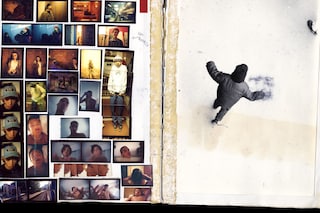
 Gallery / 9 images
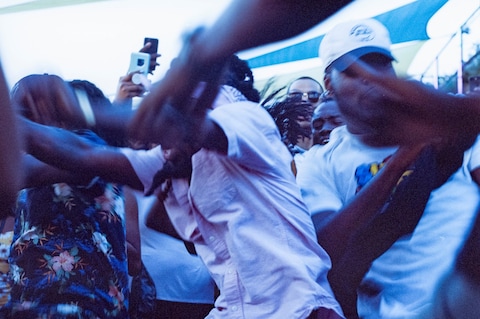
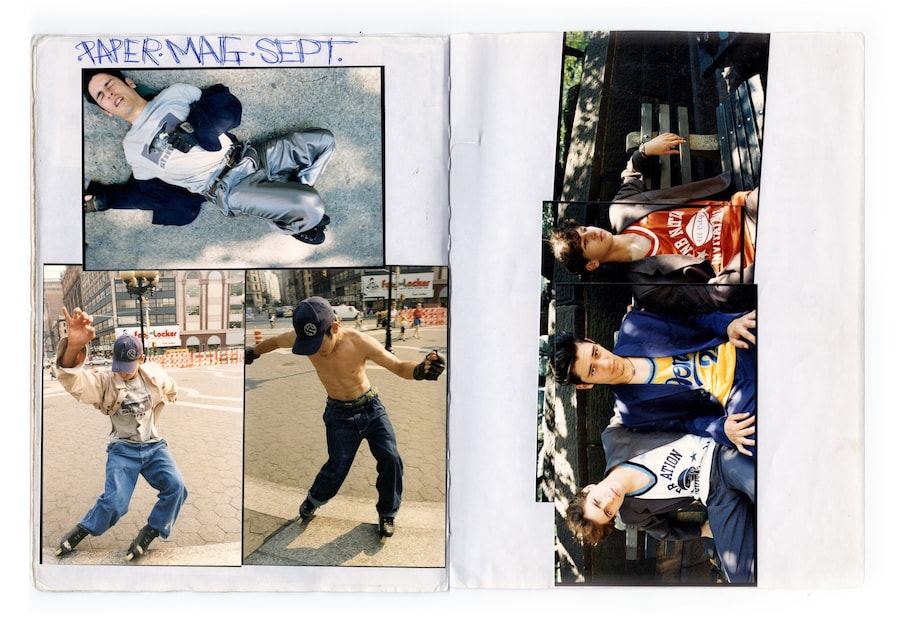
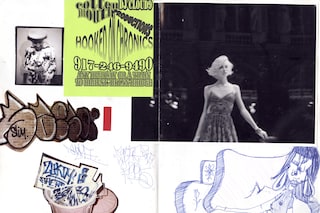
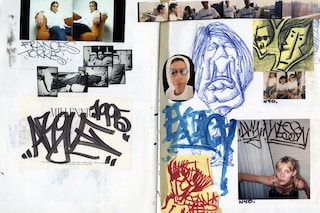
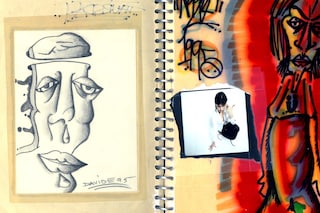
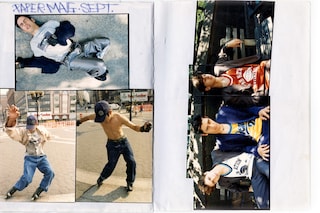
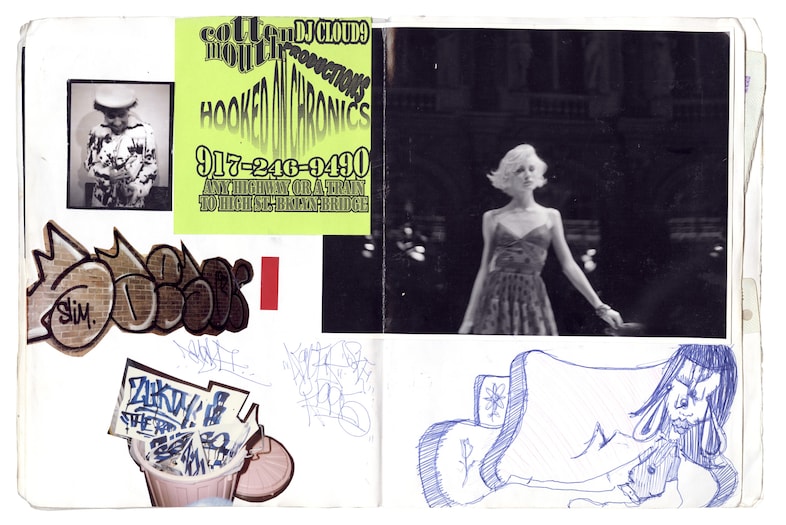
Davide Sorrenti Journals 1994-1995 brings together contact sheets, snapshots, prints, stickers, and Polaroids of the revered eponymous photographer (brother of fashion photographer Mario), collected over two years of his cut-short life. Often cited as one of the seminal photographers responsible for creating the influential heroin chic look that defined the mid-1990s, Davide Sorrenti died in February 1997 at the tender age of 20 from a lifelong genetic blood disorder compounded by heroin use.
At the time of his death, he and his entourage were already becoming increasingly high-profile, cemented by a chronicle in New York Magazine (Caution: These Kids Are About to Blow Up). His omnipresent guerrilla stickers around NYC – adhesives on phone booths, bus stops, billboards – were cited in Vogue, although initially misattributed to Calvin Klein as a subversive marketing campaign for Obsession. When he died, barely out of his teens, the now-shuttered store Colette in Paris held a memorial in his honour. But his untimely passing became entangled in part of a wider panic around fashion's hard drug-infused aesthetic and lifestyle, as noted by the New York Times in the article A Death Tarnishes Fashion’s ‘Heroin Look’.
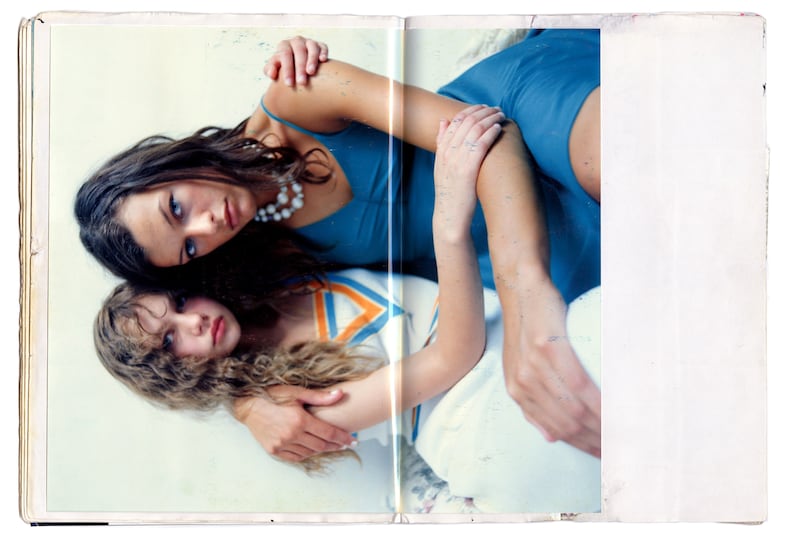
Despite his now-cult status, in his notebooks, he was just an adolescent who liked a ruckus – he documented his crew, which was part rabble-rouser, part streetwear collective; they gathered often in Sorrenti’s mother’s East Village loft. The notebooks attest to “the beginnings of his creative language”, says his mother Francesca. “They also show a moment in the 1990s that people talk about constantly, but rarely understand from the inside. These pages are the inside.”

 Courtesy of the artist
Sorrenti arrived in New York City at age five from Italy, and the Journals reflect the ultimate urban immersion of a city kid. His mother emphasises that his New York was “not the postcard version, but the city, loud, raw, unpredictable… New York seeps into his homeboy handwriting, his drawings, his mood. New York reflects a time when the city raised kids to be resourceful, curious, and brave”. She continues, “I recognise the way the city shaped him, the toughness, the sensitivity, the curiosity. He learned to look closely because the city demands that. He learned to like imperfections because the city is built on them.” Sorrenti himself began to gain traction as a photographer around age 19, his photos appearing in magazines and ad campaigns, championing a gaunt, pliant aesthetic which later came under fire for symbolising the dangers of heroin chic.
Why publish this now, 20 years later? “We’re in a time when so much of youth culture is filtered and performative,” notes Francesca. “Davide’s work is the opposite: unposed, real.… remind[ing] us of the power of vulnerability, of documenting what’s in front of you, of creating from instinct rather than strategy.”
 Courtesy of the artist
There’s renewed interest in the 1990s right now, with people revisiting the era to understand the origins or underpinnings of today’s creative landscape. As a document that predates social media, Sorrenti’s journals act as archives of downtown energy, an instinct to make sense of the metropolis visually. His chronicle captures something made purely for the present: “His journals remind us that the most meaningful work often comes from living, not performing. And I think that lesson will resonate deeply with a generation trying to find authenticity in a world overwhelmed by digital noise.” Otherwise put: “Davide’s journals are a window into a decade before everything was curated.”
The Journals offer something hard to grasp for those of us who have always been online. Francesca tells us, “You can’t fully explain what it meant to live in a world that didn’t record you. In the 90s, moments weren’t performed; they just happened. That privacy, that intensity, that uncontrolled freedom is nearly impossible to translate to anyone who grew up in a digital age.” Sorrenti and his friends had the freedom to play, to flail around and to fuck up, without scrutiny. “He could experiment, fail, dream, also be bad,” Francesca states, “without an online world judging him. That quiet space shaped his creativity.”
Davide Sorrenti Journals 1994-1995 is published by IDEA and is available now.
ShareLink copied ✔️More on these topicsArt & PhotographyLightboxDavide SorrentiFashion Photography 90sExpand your creative community and connect with 15,000 creatives from around the world.
READ MORE
Martin Parr on capturing the strangeness of Britain and its people
In pictures: The changing face of China’s underground club scene
Kısmet by Milka
Kate Moss takes over London for Kısmet by Milka

From the grotesque to the sublime, what to see at Art Basel Miami Beach

These photos show a ‘profoundly hopeful’ side to rainforest life
The most loved photo stories from November 2025
Catherine Opie on the story of her legendary Dyke Deck
Art shows to leave the house for in December 2025
Dazed Club explore surrealist photography and sound
Derek Ridgers’ portraits of passionate moments in public
The rise and fall (and future) of digital art