- Health
- Ageing
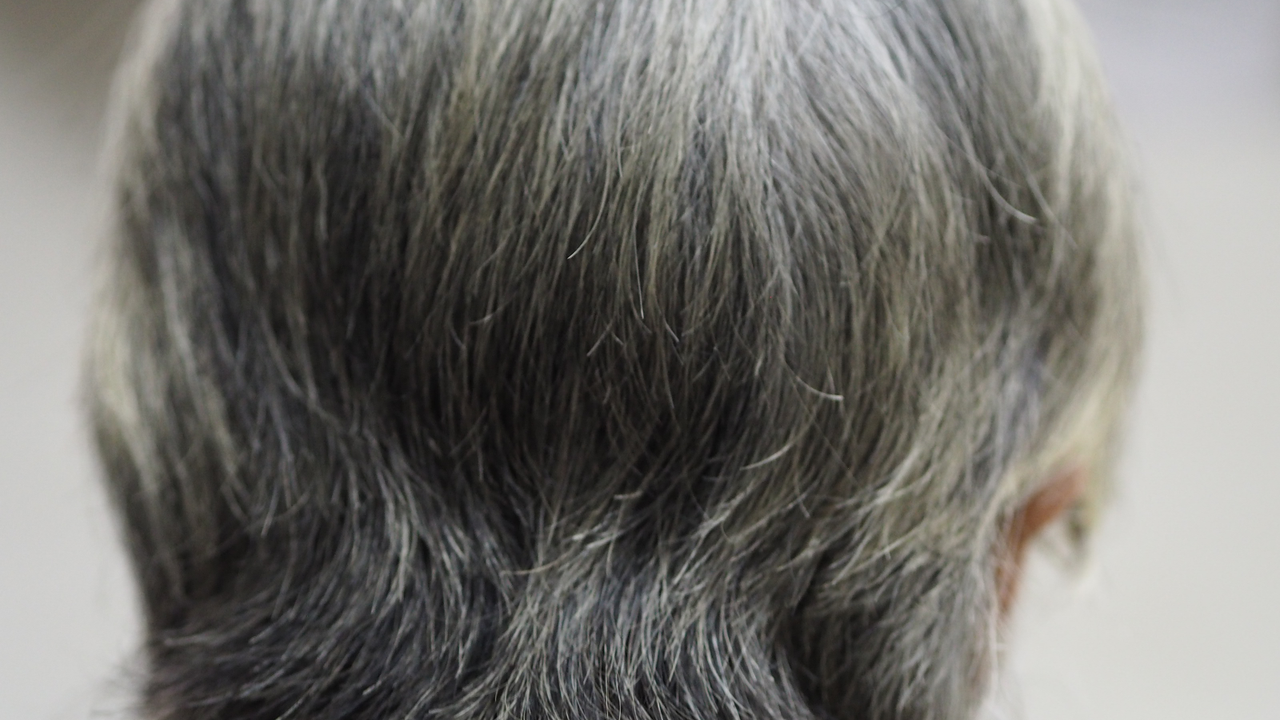
Aging comes with graying hair, which may be a sign of the body lowering its risk of cancer, a study suggests.
0 Comments Join the conversationWhen you purchase through links on our site, we may earn an affiliate commission. Here’s how it works.
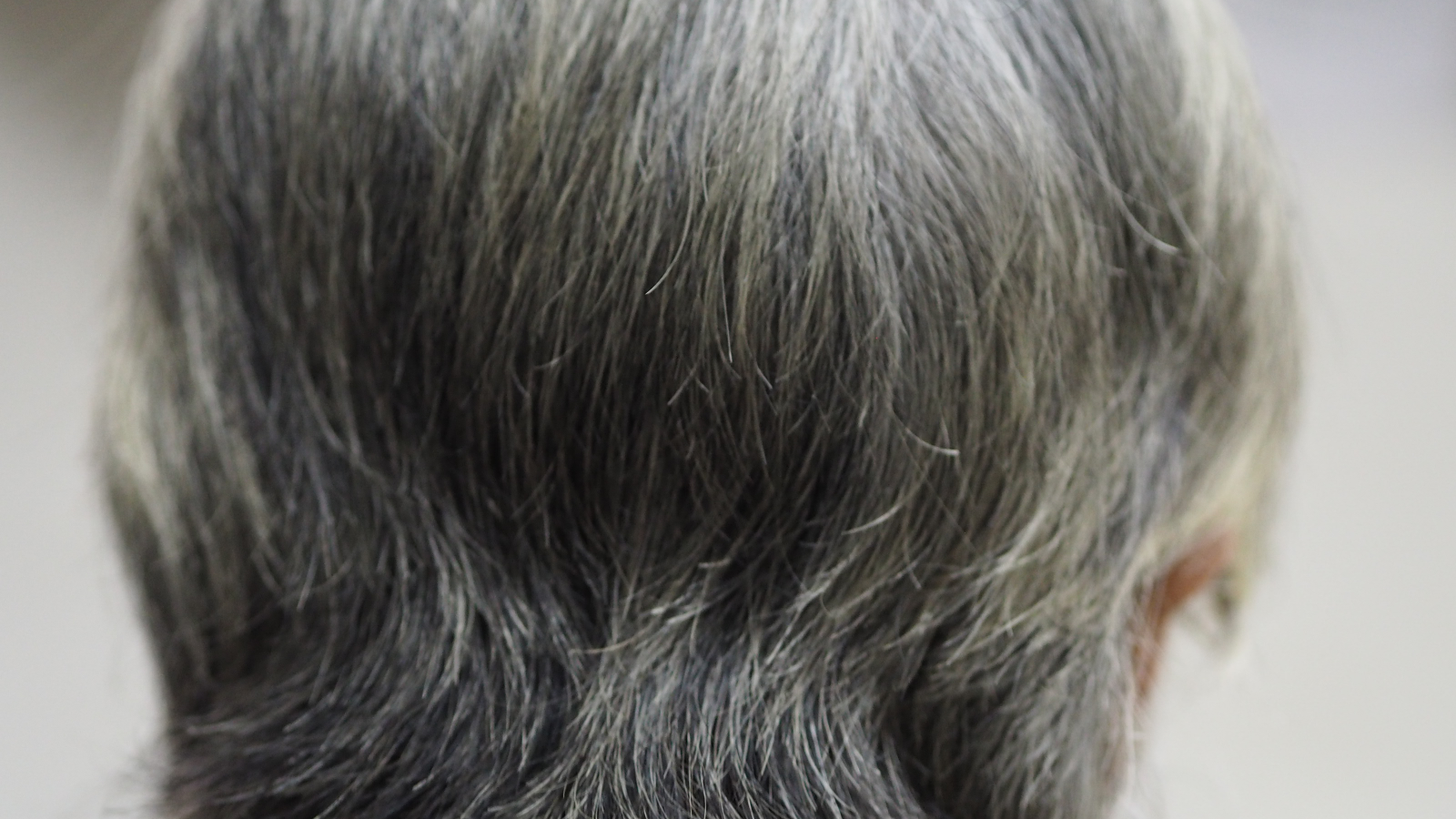 Hair may turn gray, in part, because the body is actively lowering its risk of cancer, an animal study finds.
(Image credit: Penpak Ngamsathain/Getty Images)
Hair may turn gray, in part, because the body is actively lowering its risk of cancer, an animal study finds.
(Image credit: Penpak Ngamsathain/Getty Images)
Graying hair could be a sign that the body is effectively protecting itself from cancer, a new study suggests.
Cancer-causing triggers, such as ultraviolet (UV) light or certain chemicals, activate a natural defensive pathway that leads to premature graying but also reduces the incidence of cancer, the research found.
The researchers behind the study tracked the fate of the stem cells responsible for producing the pigment that gives hair its color. In mouse experiments, they found that these cells responded to DNA damage either by ceasing to grow and divide — leading to gray hair — or by replicating uncontrollably to ultimately form a tumor.
You may like-
 We may finally understand stress-induced hair loss
-
 High-fiber diet may 'rejuvenate' immune cells that fight cancer, study finds
-
 Could aging eggs be 'rejuvenated'? New tool may help pave the way to fertility-extending treatments
The findings, reported in October in the journal Nature Cell Biology, underline the importance of these sorts of protective mechanisms that emerge with age as a defense against DNA damage and disease, the study authors say.
Graying hair as cancer defense
Healthy hair growth is dependent on a population of stem cells that constantly renews itself within the hair follicle. A tiny pocket within the follicle contains reserves of melanocyte stem cells — precursors to the cells that produce the melanin pigment that gives hair its color.
"Every hair cycle, these melanocyte stem cells will divide and produce some mature, differentiated cells," said Dot Bennett, a cell biologist at City St George's, University of London who was not involved in the study. "These migrate down to the bottom of the hair follicle and start making pigment to feed into the hair."
Graying occurs when these cells can no longer produce sufficient pigment to thoroughly color each strand.
Sign up for the Live Science daily newsletter nowContact me with news and offers from other Future brandsReceive email from us on behalf of our trusted partners or sponsorsBy submitting your information you agree to the Terms & Conditions and Privacy Policy and are aged 16 or over."It's a sort of exhaustion called cell senescence," Bennett explained. "It's a limit to the total number of divisions that a cell can go through, and it seems to be an anti-cancer mechanism to prevent random genetic errors acquired over time propagating uncontrollably."
When the melanocyte stem cells reach this "stemness checkpoint," they cease to divide, meaning the follicle no longer has a source of pigment to color the hair. Ordinarily, this occurs with old age as the stem cells naturally reach this limit. However, Emi Nishimura, a professor of stem cell age-related medicine, and colleagues at the University of Tokyo were interested in how this same mechanism operates in response to DNA damage — a key trigger for cancer development.
In mouse studies, the team used a combination of techniques to track the progress of individual melanocyte stem cells through the hair cycle after exposing them to different harmful environmental conditions, including ionizing radiation and carcinogenic compounds. Intriguingly, they found that the type of damage influenced how the cell reacted.
You may like-
We may finally understand stress-induced hair loss
-
High-fiber diet may 'rejuvenate' immune cells that fight cancer, study finds
-
Could aging eggs be 'rejuvenated'? New tool may help pave the way to fertility-extending treatments
Ionizing radiation caused the stem cells to differentiate and mature, and ultimately activated the biochemical pathway responsible for cell senescence. As a result, the melanocyte stem cell reserves were rapidly depleted over the hair cycle, thus halting the production of further mature pigment cells and leading to gray hair.
Meanwhile, by essentially switching off cell division, this senescence pathway prevented the mutated DNA from passing into a new generation of cells, thus lowering the likelihood of those cells forming cancerous tumors.
Exposure to chemical carcinogens — such as 7,12-dimethylbenz[a]anthracene (DMBA), a tumour initiator widely used in cancer research — appeared to bypass this protective mechanism. Instead of switching on senescence, it toggled on a competing cellular pathway.
RELATED STORIES—Can stress turn hair gray?
—Can gray hair be reversed?
—Why does hair turn gray?
This alternative chemical sequence blocked cell senescence in the team's mouse studies, enabling the hair follicles to retain their stem cell reserves and the ability to produce pigment, even after DNA damage. That meant that the hair retained its color, but in the long term, the unchecked replication of damaged DNA led to tumor formation and cancer, the team said in a statement.
These findings reveal that the same stem cell population can meet opposite fates depending on the type of stress they're exposed to, lead study author Nishimura said in the statement. "It reframes hair graying and melanoma [skin cancer] not as unrelated events, but as divergent outcomes of stem cell stress responses," Nishimura added.
The next step will be to translate this understanding into human hair follicles, to see whether these observations in mice carry over to people, Bennett said.
DisclaimerThis article is for informational purposes only and is not meant to offer medical advice.
 Victoria AtkinsonSocial Links NavigationLive Science Contributor
Victoria Atkinson is a freelance science journalist, specializing in chemistry and its interface with the natural and human-made worlds. Currently based in York (UK), she formerly worked as a science content developer at the University of Oxford, and later as a member of the Chemistry World editorial team. Since becoming a freelancer, Victoria has expanded her focus to explore topics from across the sciences and has also worked with Chemistry Review, Neon Squid Publishing and the Open University, amongst others. She has a DPhil in organic chemistry from the University of Oxford.
You must confirm your public display name before commenting
Please logout and then login again, you will then be prompted to enter your display name.
Logout Read more We may finally understand stress-induced hair loss
 High-fiber diet may 'rejuvenate' immune cells that fight cancer, study finds
 Could aging eggs be 'rejuvenated'? New tool may help pave the way to fertility-extending treatments
 Diet change could make brain cancer easier to treat, early study hints
 Aging and inflammation may not go hand in hand, study suggests
 Scientists are unraveling the link between pollution and psoriasis
Latest in Ageing
Aging and inflammation may not go hand in hand, study suggests
Scientists are unraveling the link between pollution and psoriasis
Latest in Ageing
Aging and inflammation may not go hand in hand, study suggests
 'Aging clocks' can predict your risk of disease and early death. Here's what to know.
 Aging: What happens to the body as it gets older?
 Brain scans could reveal your true biological age
 'I was floored by the data': Psilocybin shows anti-aging properties in early study
 New study raises big questions about taurine as anti-aging supplement
Latest in News
Gray hair may have evolved as a protection against cancer, study hints
New study raises big questions about taurine as anti-aging supplement
Latest in News
Gray hair may have evolved as a protection against cancer, study hints
 How to find the 'Christmas Star' — and what it really is
 Glue strong enough to tow a car made from used cooking oil
 Historic search for 'huge missing piece' of the universe turns up negative — but reveals new secrets of particle physics
 Today's biggest science news: Japan earthquake | Robot kicks CEO | Northern Lights forecast
 The 'hobbits' may have died out when drought forced them to compete with modern humans, new research suggests
LATEST ARTICLES
The 'hobbits' may have died out when drought forced them to compete with modern humans, new research suggests
LATEST ARTICLES- 1Is the 'Star of Bethlehem' really a planet? A bright visitor this month may hold a clue.
- 2Rare 'sunglint' transforms Alabama River into a giant 'golden dragon' — Earth from space
- 3Glue strong enough to tow a car made from used cooking oil
- 4Historic search for 'huge missing piece' of the universe turns up negative — but reveals new secrets of particle physics
- 5Today's biggest science news: Japan earthquake | Robot kicks CEO | Northern Lights forecast