
 OlegRi/Shutterstock
Kawasaki is a well-known Japanese company that produces some of the fastest motorcycles in the world. Viciously fast and storied bikes like the Ninja H2R have become the stuff of lore among riders and the general public alike. For Kawasaki bike owners — whether seasoned road warriors or newcomers — proper care and maintenance are crucial considerations. Taking good care of a bike can help extend its life and reliability for thousands of miles, protecting against breakdowns and engine failures. But when it comes to the engine's lifeblood — gasoline — many people wonder what the best options are.
In the U.S., there are typically three tiers of gasoline: regular, which is the lowest octane offering of 87; mid-grade, which is usually between 89 and 90 octane; and premium gas, which has the highest octane at levels between 91 and 94. Finding out which gas stations have the best gas can be a chore in and of itself, further adding to the tedium of simply gassing up your ride. Indeed, you can use premium gasoline in your Kawasaki motorcycle without any harm or negative downstream consequences. The bigger question is, should you?
Preventing the ping
 Craicpot/Shutterstock
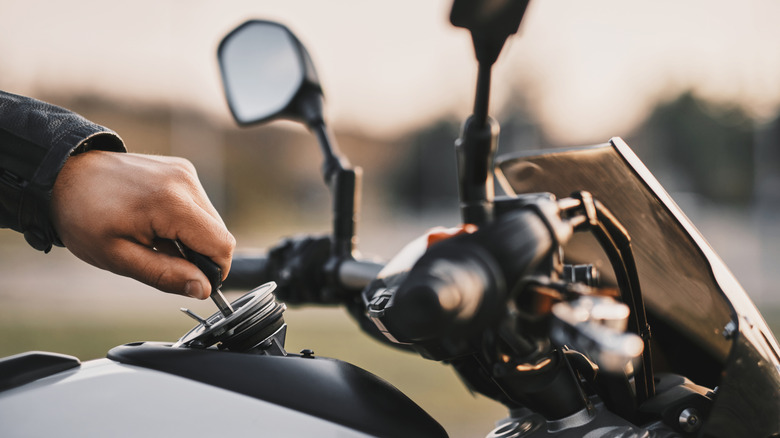
If you use a 91-plus high-octane gasoline in your bike, will it improve performance and overall engine health? First, you should check your bike's service manual and consult the dealer. If you purchased the bike second-hand and it didn't come with a manual, check online or call your nearest local dealer for background information on the bike. As an example, a 2019 Kawasaki Ninja 400 requires the base 87-octane unleaded gasoline to run happily.
Many savvy riders will go by what the user manual to their bike says and, additionally, will only up the octane of the gas when the engine starts to ping or knock. If you're not familiar with these terms, this simply means that there is a timing issue and that the engine is misfiring — think of it as when your heart skips a beat. This premature detonation is usually caused by fuel that is too low in octane for the engine's compression ratio, and can actually cause serious damage if not addressed. Yet many riders of Kawasaki bikes, like the ubiquitous Ninja model, run the entry-level 87-octane gas without any issues or audible pinging, with some riders saying that they felt no difference when using high-octane gas.
Why premium gas usually isn't worth it
 Fotkam/Getty Images
Unless you're running a serious track bike with a highly tuned engine specifically designed to run on high-octane gas, for everyday riding, you'd be wise to save your money and use regular gasoline. The engines on track bikes are designed to take advantage of the anti-knock index of higher-octane gases, and can actually reap the benefits of this pricier fuel. To drive the point home, the AAA actually estimates that as many as 16.5 million people needlessly buy high-octane gas every month, which in turn amounts to around $2 billion worth of fuel, according to research conducted in 2016. So in reality, you could be one of these people lining the pockets of big gas for nothing.
There is also a misconception that higher octane gas will lead to more power; however, generally speaking, all things being equal, this isn't the case. While spending more dollars on the best-rated gas at your local service station won't hurt your bike's internals, it might not be doing those hard-working pistons any good either. Granted, higher-octane gas options at the pump are said to contain more detergents, which hypothetically means cleaner-burning fuel and thus, a cleaner engine. But unless your Kawasaki motorcycle is specifically designed to run on costly premium gas, it isn't worth the added expense.